Dental Waste Disposal

Dental practice clear-outs, refits and closures

One-off dental waste collections for refits, mergers, closures and switches to digital X-ray: chemicals, stock, amalgam and equipment cleared. UK costs.

In short: A dental practice clear-out is a one-off collection of accumulated and unusual waste when a practice refits, merges, closes, changes owner or switches to digital X-ray, covering old chemicals, expired stock, amalgam, sharps, medicines, gypsum and old equipment. It suits practice owners, buyers and refit contractors. In the UK a one-off clear-out typically costs £150 to £500, depending on what is removed.

Get a free quote

Fixed price, no obligation. We aim to reply the same day.

By sending this form you agree to be contacted about your enquiry. See our privacy policy.

Dental practice clear-outs, refits and closures

Refits and closures uncover waste that has built up for years: half-full amalgam pots in drawers, old X-ray chemicals in the darkroom, expired emergency drugs, boxes of study models, old processors, out-of-date materials and broken equipment. Much of this is hazardous waste, and the practice remains responsible for it under the Duty of Care until it has been transferred to an authorised carrier with the correct paperwork. A single planned clear-out avoids repeated small collections and makes sure nothing is left behind for the next occupier.

When a practice is sold, merged or closed, the waste records also matter. Consignment notes for hazardous waste must be kept for at least three years and waste transfer notes for at least two, and inspectors or a purchaser may ask to see them. Clinical refits often involve removing dental chairs and units with amalgam-contaminated waste lines and separators, which should be drained and their contents collected as amalgam waste before the equipment goes.

What is included

  • Site walk-round to list every waste stream and item to be removed
  • Collection of old amalgam, separator pots and contaminated waste lines
  • Removal of X-ray fixer, developer, film and old processors
  • Disposal of expired medicines, materials and emergency drugs
  • Bulk sharps, clinical and gypsum waste cleared in the same visit
  • Waste electrical equipment sent for compliant recycling
  • A full set of transfer and consignment notes for your records

Who it is for

  • Practices refurbishing surgeries or replacing dental chairs
  • Practices switching from wet film to digital X-ray
  • Practice closures, retirements and sales
  • Mergers where two practices consolidate stock and waste
  • New owners clearing waste left by a previous practice

How much does it cost?

As a guide, a one-off UK dental practice clear-out usually costs £150 to £500 depending on the volume and the number of hazardous streams, with large closures or unusual items such as old processors priced on survey. See our full cost guide.
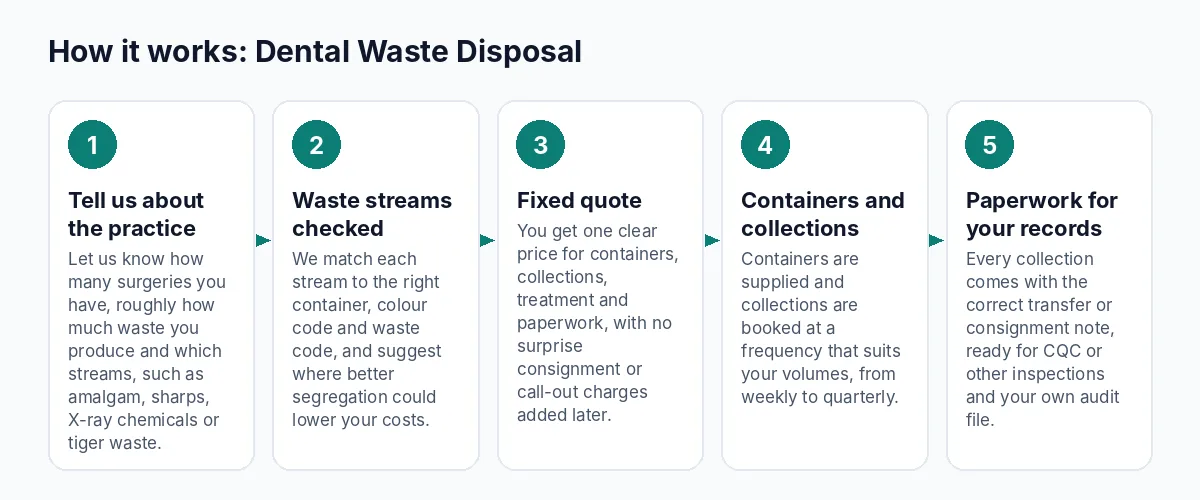
How it works

How dental practice clear-outs, refits and closures works, step by step
  1. List the waste

    Every stream and item is identified, including anything unlabelled, so the right containers and vehicle are sent.

  2. Prepare the site

    Chemicals are kept in original containers where possible, amalgam is sealed and sharps are locked ready for collection.

  3. Single collection

    Waste is collected in one planned visit, timed before builders or the next occupier arrive.

  4. Paperwork handover

    All transfer and consignment notes are provided together so the clear-out is fully documented.

Dental practice clear-outs, refits and closures: FAQs

Who is responsible for waste when a practice is sold?

The producer at the time the waste was produced remains responsible for it until it is transferred properly. In a sale, agree in writing who will clear existing waste and when, and make sure the outgoing owner keeps or hands over the waste records. A buyer should not take on stockpiled hazardous waste without knowing what it is.

What happens to unlabelled chemicals found during a clear-out?

Unknown chemicals must be identified before they can be collected and consigned, because the waste description and code must be accurate. Check original packaging, safety data sheets and practice records first. If they still cannot be identified, the contractor may need to sample or classify them, which can add cost, so tell them before the collection.

Do old dental chairs need special disposal?

The chair and unit are usually handled as waste electrical equipment or scrap, but before removal any amalgam-contaminated parts, such as suction lines, filters and separators, should be drained and their contents collected as amalgam waste. Remove water bottles, chemicals and sharps first. Your equipment supplier may also take back old units when installing new ones.

How long must we keep waste records after closing?

Keep hazardous waste consignment notes for at least three years and waste transfer notes for at least two years from the date of transfer, even after the practice has closed. Store them where they can be found if a regulator asks. Digital copies are acceptable as long as they are complete and retrievable.

Get a quote for dental practice clear-outs, refits and closures

Send a few details and get one clear, fixed price, usually the same day.

Get a quote

Last updated 6 November 2026